10 Overhead Garage Storage Ideas for Easier Seasonal Rotation
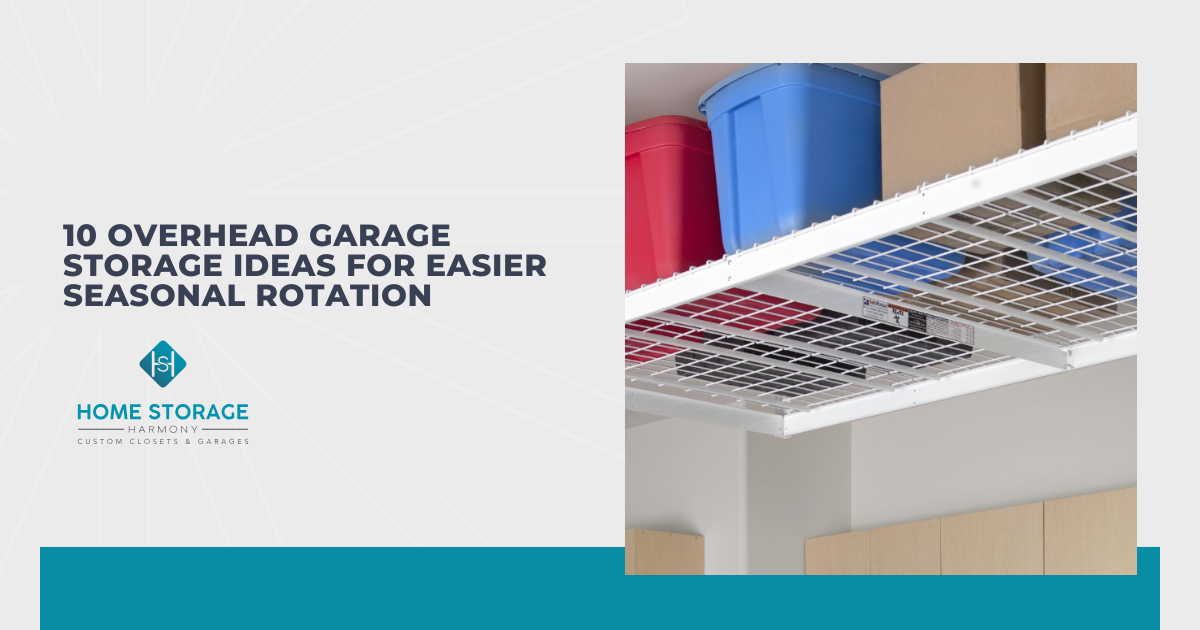
Fall arrives and the pool floats and coolers are still blocking the spot where your holiday totes need to go. Chances are, the space above your head is sitting completely empty, the one spot most storage plans never consider. My rule of thumb is simple: If it's only used twice a year, it belongs overhead. Overhead garage storage puts that empty ceiling space to work, turning it into a real home for the gear that keeps getting in your way.
Most ceiling racks and platforms go up in an afternoon, no remodel needed, so that space starts pulling its weight almost right away. Bins and off-season gear lift straight up and out of the way, clearing floor space that's stayed crowded since the last time you rotated everything. Once your gear has a permanent spot overhead, swapping seasons stops feeling like a project and starts feeling like a quick chore. You'll notice the difference the very first time you don't have to climb over a bin to get to your car.
Put these overhead garage storage ideas to work, and seasonal rotation turns into a quick swap instead of a weekend project:
- Ceiling-mounted storage racks
- Motorized overhead lift systems
- Overhead track and rail systems
- Corner ceiling storage units
- Slide-out overhead platforms
- Labeled bin systems for seasonal rotation
- Overhead storage for bulky sports and recreation gear
- Ceiling storage near the garage door
- Adjustable-height overhead shelving
- Overhead storage paired with wall systems
Pick the ones that match how your garage gets used.
Ceiling-Mounted Storage Racks
Ceiling-mounted storage racks are the most straightforward starting point if you're tackling overhead storage for the first time. These racks attach directly to ceiling joists using mounting brackets, creating a stable platform a few inches to a foot below the ceiling itself. Most models hold anywhere from 250 to 600 pounds, which covers everything from a full set of holiday totes to camping gear, luggage, and seasonal sports equipment. The wire-grid or solid-panel design keeps bins visible and easy to grab, so nothing gets lost in a dark corner for a year.
Installation typically takes a few hours with a stud finder, a drill, and a helper to hold the frame steady while it's secured. Height is worth planning before mounting begins, since the rack needs enough clearance for the garage door track and enough drop to actually reach your bins without a tall ladder. Where these racks shine is in garages with a single main storage zone rather than several smaller ones. Families rotating decorations, patio furniture cushions, or off-season sports gear tend to get the most consistent use out of a single well-placed rack.
Weight limits matter more here than with most storage solutions, since a rack mounted into joists that can't support the load creates a real safety issue. Checking your ceiling's structural capacity before loading up bins isn't optional, even though it's easy to skip in the rush to clear floor space. Most manufacturers list the joist spacing and load rating right on the packaging, so a quick check before you start drilling saves a trip back to the hardware store later.
Motorized Overhead Lift Systems
Reaching bins stored ten or twelve feet up without pulling out a ladder every time is exactly what a motorized lift solves. A remote-controlled motor lowers the platform to waist height, you load or unload it at ground level, then send it back toward the ceiling with the push of a button. The extra height is exactly where a fixed rack becomes hard to use on a regular basis, which is where a motorized system earns its keep. The platforms typically hold 200 to 400 pounds, enough for several bins or a mix of bins and bulkier items like tents or folding furniture.
Cost sits well above a standard ceiling rack, since the motor, remote, and safety mechanisms add real expense to the system. I'd only recommend the upgrade for gear you access often rather than items that only come down once a year and can tolerate a ladder. Installation also takes longer and usually benefits from a second set of hands, since the motor housing needs a secure mount and a nearby power source. Garages already wired for an outlet near the ceiling make this step considerably easier.
Safety features vary by manufacturer, so it's worth checking for auto-stop sensors that halt the platform if something blocks its path on the way down. You'll also want to confirm the remote works reliably from where you typically stand, whether that's near the garage door or closer to your workbench. Weight capacity should account for your heaviest planned load, not just what you're storing on day one, since swapping to a heavier system later means starting the installation over.
Overhead Track and Rail Systems
Flexibility sets track and rail systems apart from a fixed ceiling rack. A metal rail mounts to the ceiling, and individual storage baskets or shelves clip onto it and slide to wherever they're needed most. This mobility matters most in garages where the same overhead space needs to serve different purposes throughout the year, since a basket can shift toward the workbench in summer and back toward the garage door for holiday storage in winter. Most systems support multiple baskets on a single rail, so the whole setup expands as your storage needs grow.
Configuration is where these systems earn their keep over a static rack. You can space baskets evenly across a long rail or cluster them near one end, depending on how your garage is laid out and where you actually need access. Rails typically run in sections that connect end to end, so covering an entire garage bay or just a section above a workbench both work with the same hardware. Swapping a basket's position takes a few minutes and doesn't require any new drilling once the rail itself is up.
Weight capacity applies per basket rather than to the rail as a whole, so it's worth checking each basket's individual rating before loading it up. Rails handle lighter, more frequently accessed items better than the heaviest bins, since the sliding mechanism isn't built for the same loads as a fixed platform. Pairing a rail system with a couple of heavier fixed racks gives your garage both flexibility and serious weight capacity in the same space.
Corner Ceiling Storage Units
Corners above the garage door or above a workbench sit empty in most layouts, even though they're some of the easiest overhead space to claim. Triangular racks are built specifically for these angles, mounting into the two intersecting walls and ceiling joists rather than requiring a full rectangular footprint. The angled shape makes these units a natural fit for garages where a standard rack won't clear the garage door track or an existing shelving unit. Most corner units hold 150 to 300 pounds, which suits lighter seasonal items like wreaths, pool floats, or off-season clothing bins.
Placement above the garage door track deserves extra attention, since the rack needs enough clearance for the door to open fully without catching on stored items. Measuring the door's travel path before mounting anything saves you from a rack that looks perfect until the first time the door tries to open. Corners near a workbench or utility sink work well too, especially for items you want visible but out of the way of daily tasks.
My take on corner units is that they work best as a supplement to a larger rack rather than your only overhead storage. A single corner unit rarely holds enough to handle a full season's rotation on its own, so pairing it with a central rack or rail system covers both odd-shaped space and bulk capacity. Not every roofline fits every unit the same way, so it's worth measuring your garage's specific corner angles before you order.
Slide-Out Overhead Platforms
Climbing a ladder and stretching toward the back wall of a fixed rack gets old fast once you're doing it every season. Slide-out platforms mount on a track that lets the entire rack pull forward into the room, so you're never reaching toward the back wall to load or unload. Once everything's loaded, the platform pushes back against the ceiling and locks into place, keeping the full storage capacity of a fixed rack without the awkward reach. Most models hold similar weight to a standard ceiling rack, typically 200 to 500 pounds depending on the track hardware.
The sliding mechanism adds moving parts compared to a fixed rack, so it's worth checking the track's build quality before committing to a model. Cheaper tracks can stick or bind under a heavy load, which turns a convenience feature into a daily frustration. Higher-end systems use ball-bearing tracks that glide smoothly even at full capacity, and that difference tends to show up within the first few months of regular use.
Garages with limited walking space around the rack benefit the most from this style, since you never need to squeeze past a car or workbench to reach the back corner. You'll also want at least a few feet of clearance in front of the rack's mounted position, since the platform needs room to slide out fully before it's usable. Baskets or bins with built-in handles speed up loading and unloading even more, since you're not reaching around a rigid frame to grab what you need.
Labeled Bin Systems for Seasonal Rotation
A rack or platform only saves time if you can tell what's inside each bin without pulling every single one down to check. Color-coded lids work well for sorting by season, with one color for holiday decor, another for summer gear, and a third for anything that stays up year-round. Clear labels with the season and general contents written in large text help even more, since squinting at faded marker from ground level defeats the purpose of overhead storage in the first place. Simple systems tend to hold up better than detailed ones, since anything too complicated tends to fall apart after the first busy rotation.
Placement on the rack should follow the labeling system rather than fighting it, with seasonal bins grouped together instead of scattered across the whole platform. Bins you'll need soonest belong near the front or center of the rack, while anything with a longer wait until the next rotation can sit toward the back or a harder-to-reach spot. This approach cuts down on digging through bins that aren't relevant to the current season. Consistent bin sizes also help, since mismatched shapes waste rack space and make a tidy layout harder to maintain.
A quick inventory list taped inside the garage door or kept on your phone makes the whole system even more useful, especially in a garage with more than a handful of bins. Noting which bin holds what saves you from opening three totes before finding the one with the pool floats. Updating that list each time you swap seasons takes a couple of minutes and keeps the whole system accurate, since skipped updates let it drift out of date within a year. Bins with broken or missing labels are worth replacing right away, since a labeling system only works as well as its weakest link.
Overhead Storage for Bulky Sports and Recreation Gear
Kayaks, bikes, and camping gear rarely fit neatly into a standard bin, which makes them some of the hardest items to store without eating up an entire wall or corner in your garage. Dedicated overhead hooks and hangers get these bulky items off the floor by suspending them from the ceiling instead of leaning them against a wall or stacking them up. Kayak hoists use a pulley system to lift the boat close to the ceiling, freeing up the wall space it would otherwise take up for most of the year. I've seen garages reclaim an entire bay just by moving two or three bulky items overhead and clearing them off the floor completely.
Bike storage works a little differently, with hooks or pulley lifts that hang each bike by its wheel or frame rather than a full platform system. Spacing hooks a couple of feet apart keeps multiple bikes from bumping into each other, especially if more than one person in your household rides. Camping gear like tents, sleeping bags, and folding chairs fits well in mesh or open-weave overhead bags, since airflow matters for gear that needs to stay dry between your trips.
Weight and shape both matter more here than with standard bins, since an odd-shaped kayak or a loaded camping bag doesn't distribute weight the same way a square tote does. Checking a hoist or hook's rated capacity against your actual gear, not just an average estimate, prevents a hook from failing under a load it wasn't built for. Recreation gear also grabs faster before a trip when it's grouped together in one part of the garage rather than scattered across multiple storage zones.
Ceiling Storage Near the Garage Door
The area just inside the garage door often gets overlooked, even though it's usually the easiest overhead spot to reach on your way in or out. A rack or a few strategically placed hooks near this entry point work well for gear you need during the actual transition week, like the bins currently coming down or the ones about to go up. Keeping transitional items here instead of buried at the back of the garage cuts down on the walking and digging that usually slows down a seasonal swap. Most garages have enough clearance near the door track to fit a slim rack without interfering with the door's operation.
Door clearance is the one thing worth double-checking before mounting anything in this zone. Garage door tracks extend several inches into the ceiling space on either side, so a rack placed too close can block the door's travel path or the sensor beam near the bottom. Measuring the full range of the door's motion, not just its resting position, prevents a rack that works fine until the door tries to open all the way. A few extra inches of clearance on each side usually solves the problem without giving up much storage space.
This zone works best as a rotating staging area rather than permanent storage, since its whole value comes from proximity and quick access. Bins waiting to come down for the season, or ones that just came down and haven't found a permanent spot yet, belong here more than anything meant to sit untouched for months. You'll get the most out of this spot by treating it as a short-term holding zone and moving items to a main rack once the transition settles.
Adjustable-Height Overhead Shelving
Ceiling height varies from garage to garage, and a shelving system that assumes an average height often ends up too high to reach or too low to clear a full-size vehicle. Adjustable-height shelving uses a bracket system that lets you set the shelf anywhere within a range, typically six inches to two feet below the ceiling. I've installed these most often in garages with lower ceilings, where every inch of clearance matters for both the shelf and the car parked underneath it. The adjustment mechanism usually locks in place with a pin or bolt, so the shelf stays put once you've found the right height.
Box sizes change throughout the year too, and a fixed shelf height can leave awkward gaps above shorter bins or force taller ones to sit at an angle. Raising or lowering the shelf to match your current load keeps the space efficient instead of wasting a foot of clearance on a half-empty tier. Some systems offer multiple adjustment points along the same bracket, so you can build two or three tiers into a single rack and skip settling for one flat shelf. This flexibility makes this option worth the slightly higher cost compared to a fixed rack.
Reconfiguring the shelf takes a few minutes with the right tools, usually just a wrench or a release lever built into the bracket. You'll want to test the adjustment mechanism before loading it up fully, since a shelf that's hard to move once weighted down defeats the purpose of buying an adjustable system in the first place. Garages that double as workspaces benefit especially, since the shelf can sit higher during projects that need headroom and lower when it's time to load up for a season change.
Overhead Storage Paired With Wall Systems
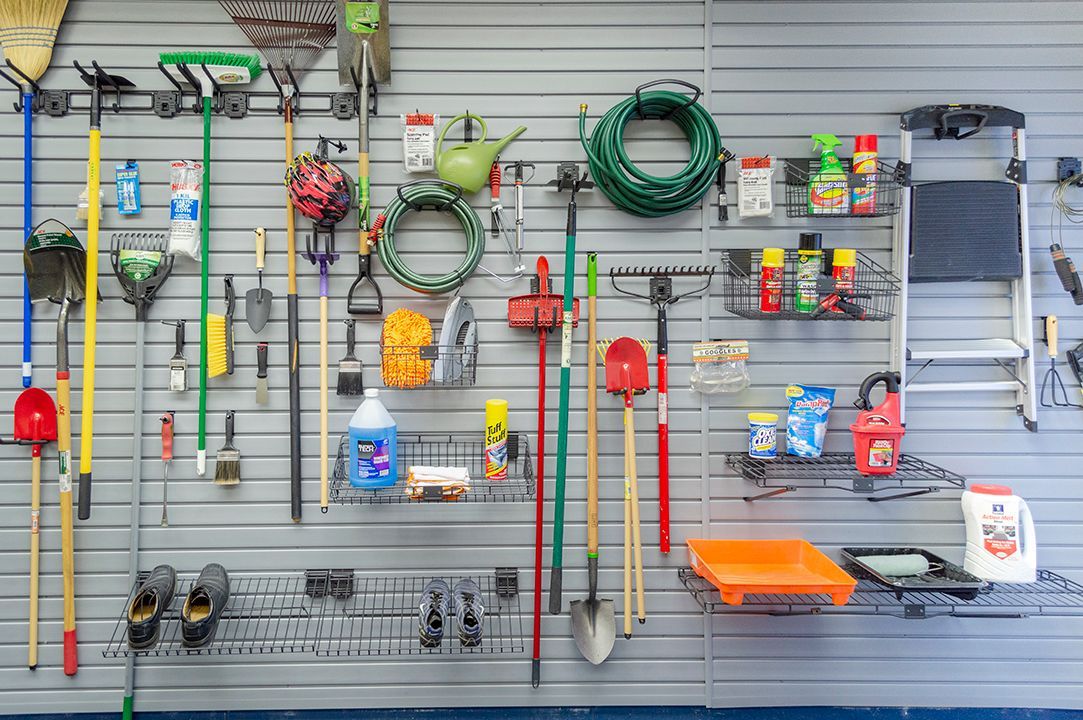
Overhead racks handle bulk bins and larger items well, but they're not the only storage layer worth building into a garage. Wall-mounted slatwall, hooks, and shelving fill in the gaps that ceiling storage leaves behind, covering items you need more often or ones too awkward to hang overhead. A slatwall panel near your workbench can hold tools and small hardware, while an overhead rack a few feet away handles the seasonal bins that only come down twice a year. Splitting storage this way keeps each zone doing what it does best instead of asking one system to handle everything.
Planning both layers together works better than adding wall storage as an afterthought once the ceiling rack is already up. Mapping out which items belong overhead and which belong on the wall before buying anything prevents overlap and wasted hardware. Items used weekly, like sports equipment or yard tools, usually fit better on wall hooks within easy reach, while items used once or twice a year make more sense overhead. Garages with limited wall space benefit most from this approach, since the ceiling picks up storage the walls can't handle alone.
A full seasonal rotation gets easier once both systems are in place and each has a clear job. Bins move between the overhead rack and a wall-mounted staging area as the season changes, so nothing gets shuffled around the floor looking for a temporary spot. You'll notice the biggest difference in garages that felt cluttered no matter how much was purged, since the clutter was often a layout problem rather than a volume problem. Pairing both systems gives your garage the flexibility to handle gear at every level, not just what fits on the ceiling.
Conclusion
Seasonal rotation stops being a dreaded chore the moment your garage has a real system for gear that only shows up twice a year. Overhead garage storage turns wasted ceiling space into the most useful square footage in the entire garage, whether that means a single rack or a full combination of racks, rails, and wall storage working together. The right setup for your garage depends on your ceiling height, your gear, and how often you actually rotate through the seasons. Once that system is in place, swapping holiday totes for camping gear becomes a task measured in minutes, not a weekend you keep putting off.
Recent Posts