How to Give Each Child Their Own Space in Shared Kids' Closets

Anna Bellamy • July 16, 2026

How to Give Each Child Their Own Space in Shared Kids' Closets

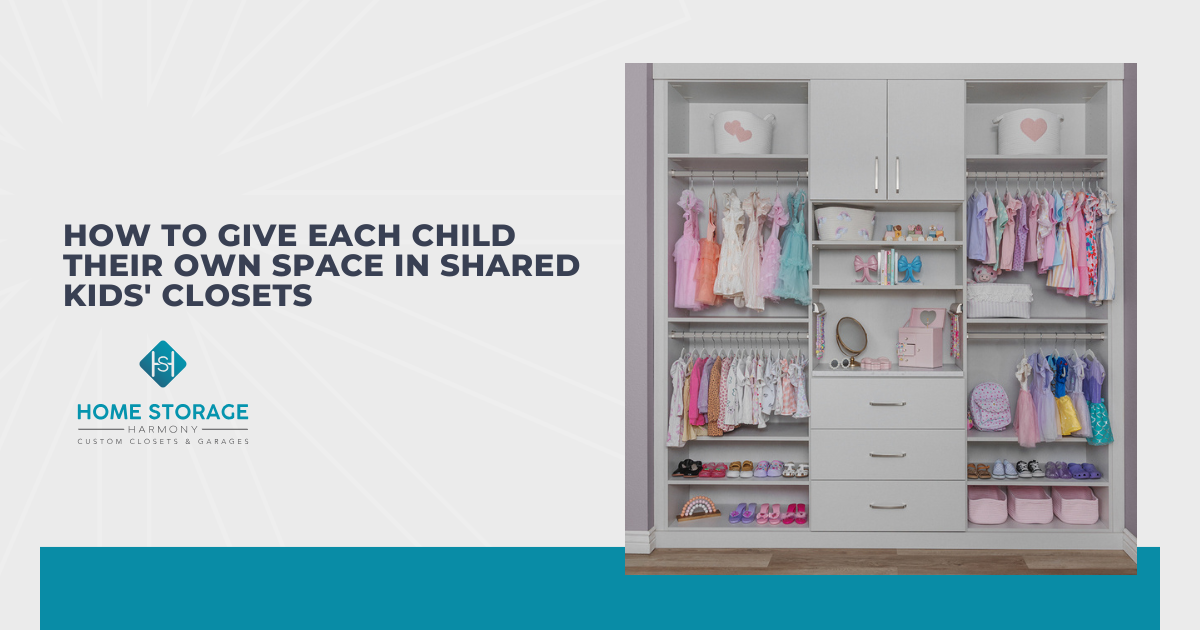
Kids' closets shared by two or more children often get overlooked until sibling squabbles force the issue. Two children rarely share the same taste, height, or daily habits, yet they're expected to make do with one space and no real structure. Giving that space an actual plan changes everything, and the arguments over shelves and hangers start to disappear. The fix usually has less to do with square footage and more to do with how that space gets divided.


I've noticed that the closets working best for two kids share one trait: Each child can point to exactly what's theirs without asking. Closet space feels different to a five-year-old than it does to a tween, and both deserve a setup that matches how they actually get ready each morning. Kids notice when their belongings have an actual home, and that recognition often carries over into how they treat the rest of their room. Ownership like this tends to stick well beyond the closet door.


These practical strategies help divide kids' closets so every child gets a space that feels like their own:


  • Split zones with clear visual boundaries
  • Assign separate hanging sections
  • Use labeled bins and baskets
  • Add individual shelving at kid-friendly heights
  • Personalize each side with color or decor
  • Incorporate adjustable components for growing kids
  • Reserve floor space for shoes and accessories

Each idea below can be adapted to closets of any size, so don't skip past the ones that seem too simple to matter.

Split Zones With Clear Visual Boundaries

The easiest way to stop closet disputes before they start is to make the divide impossible to miss. A painted stripe, a piece of contact paper, or even a different-colored bin liner can mark where one child's space ends and the other's begins. Kids don't need a verbal reminder about boundaries if the closet itself makes the split obvious.


You don't need major renovations to pull this off. Adding a slim vertical divider panel down the middle of the closet gives both kids a physical marker they can see and touch. If a full divider isn't practical, even hanging a curtain or fabric panel partway can create the same effect on a smaller budget.


Kids respond well to visual cues because they remove the guesswork. Once the boundary is clear, you'll notice fewer questions about whose hanger is whose or which side a toy belongs on. The closet starts to feel like two personal spaces instead of one shared mess. Even young kids who can't read labels yet will pick up on a color or pattern boundary fast.

Assign Separate Hanging Sections

In my experience, most sibling closet fights start with hangers, not clothes. When you've got two kids sharing one rod, shirts get pushed together, favorite outfits go missing, and nobody's sure whose hoodie just fell on the floor. Splitting the rod into two distinct sections solves this before it becomes a daily argument.


The easiest fix is installing a second rod at a height that matches each child's reach. If you've got a younger child, a lower rod lets them dress themselves without help, while an older sibling can handle a standard height closer to eye level. This also cuts down on having to hang clothes for both kids every day.


If your closet only has room for one rod, a double-hang setup can still create two clear zones without needing extra hardware. Adding a second rod bracket partway across your existing bar splits the space in half while keeping the original rod intact. Either way, each child ends up with a hanging area sized to their actual wardrobe instead of fighting for room on a single shared bar.

Use Labeled Bins and Baskets

Bins and baskets work best when they take the guesswork out of where things go. Simple labels, whether printed, handwritten, or picture-based for your younger kids, tell each child exactly which basket holds their socks, accessories, or off-season clothes. This cuts down on items ending up in the wrong pile or getting tossed on the floor because nobody wanted to sort through the other kid's stuff first.


Color-coding bins by child gives you another layer of clarity that works even before a kid can read. Try assigning blue bins to one child and green to another so the system holds up regardless of age or reading level. It also makes cleanup faster since everything has an obvious home.


Stackable bins are especially useful if you're working with limited floor space. Label each tier by category, like "shoes," "hats," or "extra blankets," to keep the vertical space organized instead of turning into a pile. Over time, your kids will start sorting their own items back into the right bins without being asked, which cuts down on daily reminders.

Add Individual Shelving at Kid-Friendly Heights

Shelves only work if your kids can actually reach them without asking for help. A shelf positioned for an adult's convenience often sits too high for a five-year-old, which means they'll need someone to grab their own folded clothes every morning. Lowering at least one shelf to each child's height changes that instantly.


I like recommending adjustable shelf brackets for this exact reason. They let you set one shelf lower for your younger child and another at a taller height for an older sibling, all within the same closet frame. As your kids grow, you can move the brackets instead of replacing the whole shelving unit.


Open shelving also gives each child a spot for the items they use daily, like folded pajamas, backpacks, or a favorite stuffed animal. When these things live at eye level or below, your kids stop pulling everything off a top shelf just to reach one item, and you'll also field fewer requests for help getting dressed each morning. Consider how much shelf space each child actually needs based on their wardrobe size. A closet holding two very different age groups usually benefits from uneven shelf spacing rather than a perfectly symmetrical split.

Personalize Each Side With Color or Decor

A kids’ closet stops feeling shared the moment each side reflects the child using it. Letting one child pick a favorite color for their bins or hangers, while the other chooses something completely different, turns a plain closet into two distinct spaces. This doesn't need to be expensive or permanent to make an impact.


Small decor touches go a long way toward this goal. A nameplate, a painted initial, or a strip of patterned wallpaper on just one half can mark ownership without any major renovation. Removable decals work especially well here since they can be swapped out as your kids' tastes change.


Even simple choices like matching hamper colors to each child's side reinforce the same idea. Your kids are more likely to treat their space with care when it actually feels like theirs. This sense of ownership often extends past the closet and into how they handle the rest of their belongings.

Incorporate Adjustable Components for Growing Kids

Building flexibility into a shared closet from the start matters since kids' storage needs shift faster than most parents expect. A rod height that works perfectly this year might feel too low by next school year, and a shelf spacing that fits toddler clothes won't hold much once your child moves into bigger sizes. Adjustable components save you from redoing the whole closet every time your kids grow.


Look for rods and shelves that use adjustable brackets instead of fixed mounting points. This lets you raise a hanging rod as your younger child gets taller, or add an extra shelf once their wardrobe expands. It also means you won't need to buy an entirely new closet system every couple of years.


I always suggest modular components for the most flexibility long term. Systems built from individual sections, rather than one fixed unit, let you rearrange or swap pieces as your kids' needs change or as they eventually outgrow sharing a closet altogether. This adaptability keeps the closet useful for years instead of needing a full redo every time something no longer fits.

Reserve Floor Space for Shoes and Accessories

Floor space gets overlooked more than any other part of a shared closet, yet it's usually where the most clutter ends up. Shoes, bags, and sports gear pile up fast when there's no assigned spot for them, and that pile almost always ends up in the middle where both kids can trip over it. Giving each child a defined floor zone keeps this mess from spreading across the whole closet.


A simple shoe rack split into two sections works well for most shared closets. Assigning one side to each child means shoes stay sorted by owner instead of getting mixed into one pile by the door. If floor space is tight, a hanging shoe organizer on the back of the closet door can free up room without taking up any additional square footage.


Accessories like backpacks, sports bags, or seasonal gear need a spot too, and the floor is often the only place large enough to hold them. Assign a basket or a specific corner to each child so these bulkier items don't end up dumped wherever there's room. Once shoes and accessories have their own defined spots, the rest of the closet stays easier to keep organized since nothing spills over from the floor.


Conclusion

Your closet doesn't need a full renovation to stop feeling like shared territory. Small, deliberate changes in layout, labeling, and personal touches turn one crowded space into two that each feel like they belong to someone. Well-divided kids' closets end up teaching your children more than tidiness. They learn what it looks like to respect a space that isn't entirely their own.

Share this article

Recent Posts

How to Get the Most Out of Your Garage Slatwall for Every Type of Storage
By Anna Bellamy June 1, 2026
Discover how to set up your garage slatwall for every type of storage, from daily tools to seasonal gear, using the right hooks, bins, baskets, and shelves.
Seasonal Care Tips for Garage Cabinets Every Homeowner Should Know
By Anna Bellamy March 30, 2026
Keep your garage cabinets in top shape year-round with seasonal care tips that help prevent damage, improve organization, and extend their overall lifespan.
5 Ways to Prevent Overcrowding in Reach-In Closets
By Anna Bellamy January 26, 2026
Learn five practical ways to prevent overcrowding in a reach-in closet using smart editing, seasonal rotation, zoning, and storage choices that fit the space.
8 Holiday Organization Tips for a Clutter-Free Walk-In Closet
By Anna Bellamy November 18, 2025
Keep your custom closet system organized and functional and your routines simplified with practical tips to store and rotate seasonal essentials all year long.
Smart Tips to Organize Seasonal Items in Your Custom Closet System Year-Round
By Anna Bellamy September 24, 2025
Keep your custom closet system organized and functional and your routines simplified with practical tips to store and rotate seasonal essentials all year long.
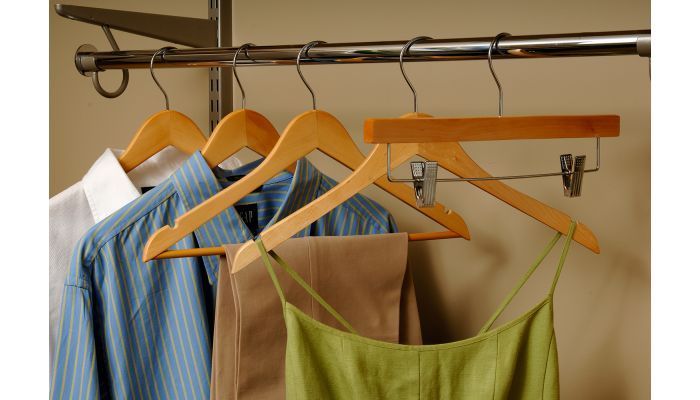
Clothes hanging in a closet: white shirt, blue shirt, tan pants, and green dress.
By Anna Bellamy May 4, 2024
Discover premium, stylish, and versatile hanger solutions designed to keep your home organized. Find quality hangers for every closet, garment, and storage need.
How to Choose the Perfect Hanger for Every Space
By Anna Bellamy May 1, 2024
The right hanger can make all the difference in keeping your closet organized and your clothes looking their best. Learn how to choose the perfect hangers for every space—from small closets to spacious walk-ins—and keep your wardrobe neat, functional, and stylish.
Simplify Garage Slatwall Accessory Selection: Get Started with an Easy Starter Kit
By Anna Bellamy April 29, 2024
Organizing your garage has never been easier! With a Garage Slatwall Starter Kit, you can quickly and efficiently select the right accessories to keep tools, sports gear, and essentials neatly stored. Simplify your space and get started today.
Custom Closets for Small Spaces: Making the Most of Limited Square Footage
By Anna Bellamy April 25, 2024
Small space? No problem. Custom closets are designed to fit your unique layout, helping you maximize every inch of storage while keeping your home organized and stylish. Discover how smart closet solutions can turn even the tightest spaces into functional, clutter-free zones.
Home gym with dark gray cabinets, white shelves, and workout equipment on a black mat.
By Anna Bellamy April 22, 2024
Refresh your home this spring with expert cleaning and organization tips. Declutter your space, maximize storage solutions, and enjoy a cleaner, more organized home all year long.
Show More