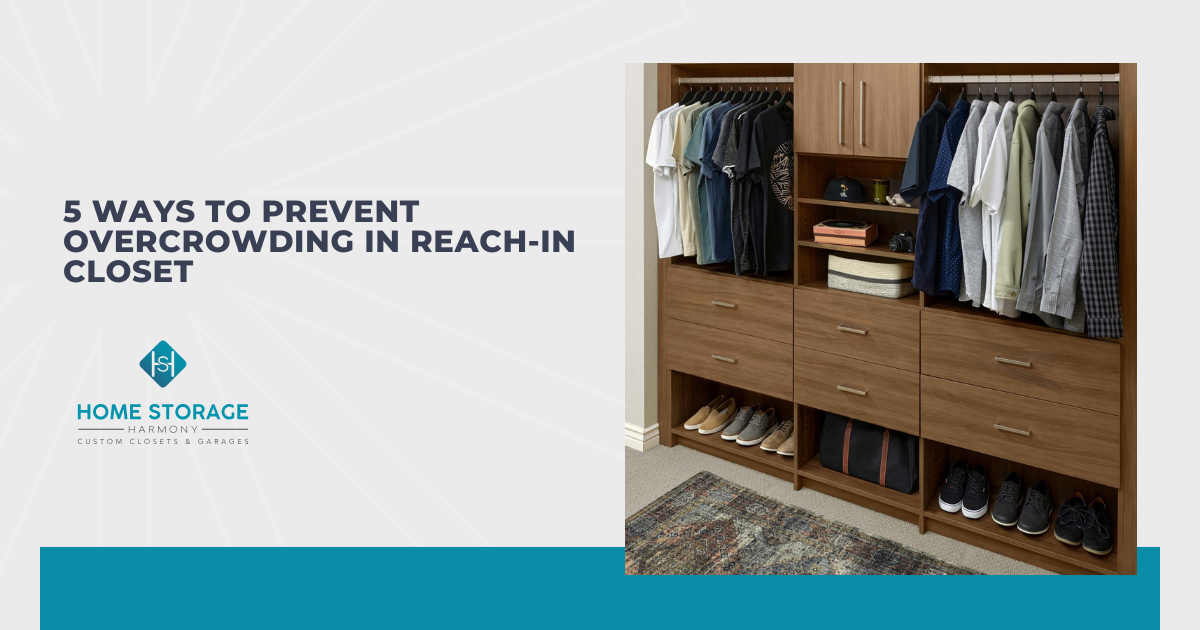
5 Ways to Prevent Overcrowding in Reach-In Closets

Overcrowding is one of the most common frustrations with a reach-in closet. Space fills up quickly, and before long, clothing is crammed together, items get forgotten, and getting dressed feels harder than it should. From my work designing and organizing closets, I’ve seen how a few small habits can either prevent crowding or make it worse over time.
A reach-in closet doesn’t have the luxury of extra depth or walk-in space, so every decision matters more. What you keep, how you store it, and how often you reassess the setup all play a role in whether the closet feels usable or chaotic. The good news is that overcrowding usually isn’t about needing more space. It’s about using the existing space more intentionally.
Below are five practical ways to prevent overcrowding and keep a reach-in closet comfortable and functional:
- Edit your wardrobe regularly
- Use vertical space strategically
- Rotate clothing by season
- Group and zone your clothing
- Choose storage solutions that fit the space
Let’s break these down one by one and look at how each can help your reach-in closet stay organized and easy to use.
Edit Your Wardrobe Regularly
Overcrowding often starts with holding onto more than a reach-in closet can comfortably support. Clothing that no longer fits your lifestyle, season, or preferences still takes up the same amount of space as items you wear every week. Editing your wardrobe on a regular basis helps create breathing room and keeps the closet from feeling packed.
A good place to start is by looking at what you actually wear. Items that haven’t been touched in months often stay out of habit rather than need. Removing those pieces gives your reach-in closet space to function instead of forcing everything to compete for room.
Seasonal edits are especially helpful in smaller closets. Cold-weather layers, bulky sweaters, or heavy coats don’t need to hang next to lightweight pieces year-round. Rotating items out as seasons change keeps the closet focused on what’s useful right now.
From experience, closets stay less crowded when editing becomes a routine instead of a one-time project. Even a quick check-in a few times a year can prevent buildup. Consistent editing makes it easier to keep a reach-in closet comfortable, organized, and easy to maintain.
Use Vertical Space Strategically
A reach-in closet can feel overcrowded when storage is limited to a single hanging rod or shelf. When everything is forced into the same horizontal plane, clothing piles up fast. Making use of the full height of the closet helps spread items out and reduces visual clutter.
I often see closets improve immediately once vertical space is used more intentionally. Adding a second hanging rod, adjustable shelving, or stacked storage creates room for different types of clothing without increasing the footprint. Shorter items can be layered below, while longer pieces keep their own space.
Upper sections of the closet are especially useful for items that aren’t needed every day. Seasonal clothing, bags, or folded items can live higher up without interfering with daily access. This keeps the most-used pieces at eye level and within easy reach.
Using vertical space isn’t about adding more storage everywhere. It’s about creating balance so the reach-in closet feels open instead of compressed. When height is used wisely, overcrowding becomes much easier to manage.
Rotate Clothing by Season
I notice overcrowding creep in when every piece of clothing is kept in a reach-in closet year-round. Bulky coats, heavy sweaters, and seasonal layers take up space long after they’re needed. Rotating clothing by season keeps the closet focused on what you actually wear day to day.
Separating warm-weather and cold-weather items makes daily access easier. When off-season pieces are removed, it becomes simpler to see outfits and put things away without forcing hangers together. This shift alone can make a reach-in closet feel more breathable.
Storing off-season clothing doesn’t require a complex setup. Upper shelves, labeled bins, or another storage area can hold those items until they’re needed again. Moving them out of the main hanging space frees up room and reduces visual clutter.
Seasonal rotation also creates a built-in moment to reassess your wardrobe. Items that no longer fit your lifestyle stand out during the swap. Over time, this habit helps keep overcrowding from returning to your reach-in closet.
Group and Zone Your Clothing
Overcrowding becomes harder to control when everything is stored together without clear boundaries. In a reach-in closet, grouping similar items creates structure and keeps clothing from spilling into neighboring areas. Defined zones make it easier to see what you have and put items away without disrupting the rest of the space.
Clothing can be grouped by type, such as tops, pants, dresses, and outerwear, or by purpose, like workwear and casual pieces. Keeping similar items together prevents piles from forming and reduces the urge to squeeze things into open gaps. This approach also makes it easier to spot duplicates and unused pieces.
Zoning helps control how much space each category takes up. When one section starts to feel tight, it’s a clear signal that editing or rotation may be needed. Without zones, overcrowding tends to spread across the entire closet instead of staying contained.
Clear groupings also make daily routines smoother. Reaching for outfits, returning items after laundry, and maintaining order all take less effort when everything has a defined place. In a reach-in closet, zoning is one of the simplest ways to keep clutter from building back up.
Choose Storage Solutions That Fit the Space
Storage choices can either support a reach-in closet or make it feel tighter than it needs to be. Items that are too bulky for the space, like wide bins or oversized hangers, reduce usable room without adding real value. Selecting storage that matches the scale of the closet helps keep everything balanced and accessible.
Slim hangers, shallow bins, and low-profile shelving work better in narrower closets. These options allow clothing to hang properly and shelves to stay usable without pressing items together. When storage fits the space, the closet feels easier to move through and manage.
Flexibility also matters as storage needs change. I’ve found that removable shelves, adjustable rods, and modular accessories make it easier to adapt without starting over. Fixed or oversized pieces can limit how the closet evolves over time.
Storage should make organization feel simpler, not more restrictive. When every piece is chosen with the reach-in closet’s size in mind, it becomes much easier to prevent clutter from building back up.
Conclusion
A reach-in closet stays functional when space is managed with intention rather than quick fixes. Editing regularly, using vertical space, rotating clothing by season, zoning items, and choosing storage that fits the scale of the closet all work together to prevent clutter from creeping in. These habits don’t require more square footage, just smarter decisions about what stays and how it’s stored. With a consistent approach, a reach-in closet can feel organized, accessible, and much easier to maintain over time.
Recent Posts